
Préférences
By clicking “Accept all cookies”, you agree to the storing of cookies on your device to enhance site navigation, analyze site usage, and assist in our marketing efforts, as outlined in our Privacy Policy.


By clicking “Accept all cookies”, you agree to the storing of cookies on your device to enhance site navigation, analyze site usage, and assist in our marketing efforts, as outlined in our Privacy Policy.
September 21st, 2026
How to spot a fake Swiss online store, check a site before you order, and get your money back after a scam.

A Geneva boutique closing after 34 years. A Zurich family liquidating its stock. All of it is fake: the business, the couple, the address, down to the photo. Behind seven Swiss e-commerce sites still online as we write this article lies a vast network of 90 stores spread across 14 countries.
Here is how it works, and how to avoid losing your money to it.
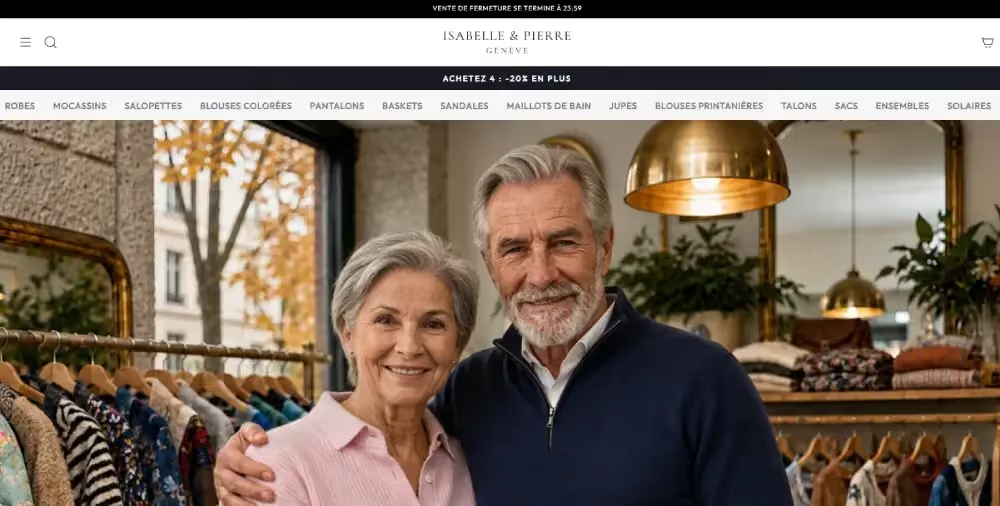
A customer in Lausanne spots an ad on social media. A Geneva boutique is closing after 34 years, its stock is going at 70% off, and the sale ends that same evening at 11:59 p.m. The site is in French, polished, fast. It displays the Swiss Post logo, free delivery within Switzerland, and a 30-day money-back guarantee. She orders her item and pays by credit card.
Too late. She does not know it yet, but she is joining a long list of victims. This scam is running in 14 countries.
In reality, her package arrives several weeks later, shipped from China, and its contents have nothing whatsoever to do with the photos on the product page.
September 2, 2026
An ad appears in the news feed. Geneva boutique, closing after 34 years, 70% off, sale ends tonight at 11:59 p.m.
Same day
Order placed, paid by credit card. Automatic confirmation right away.
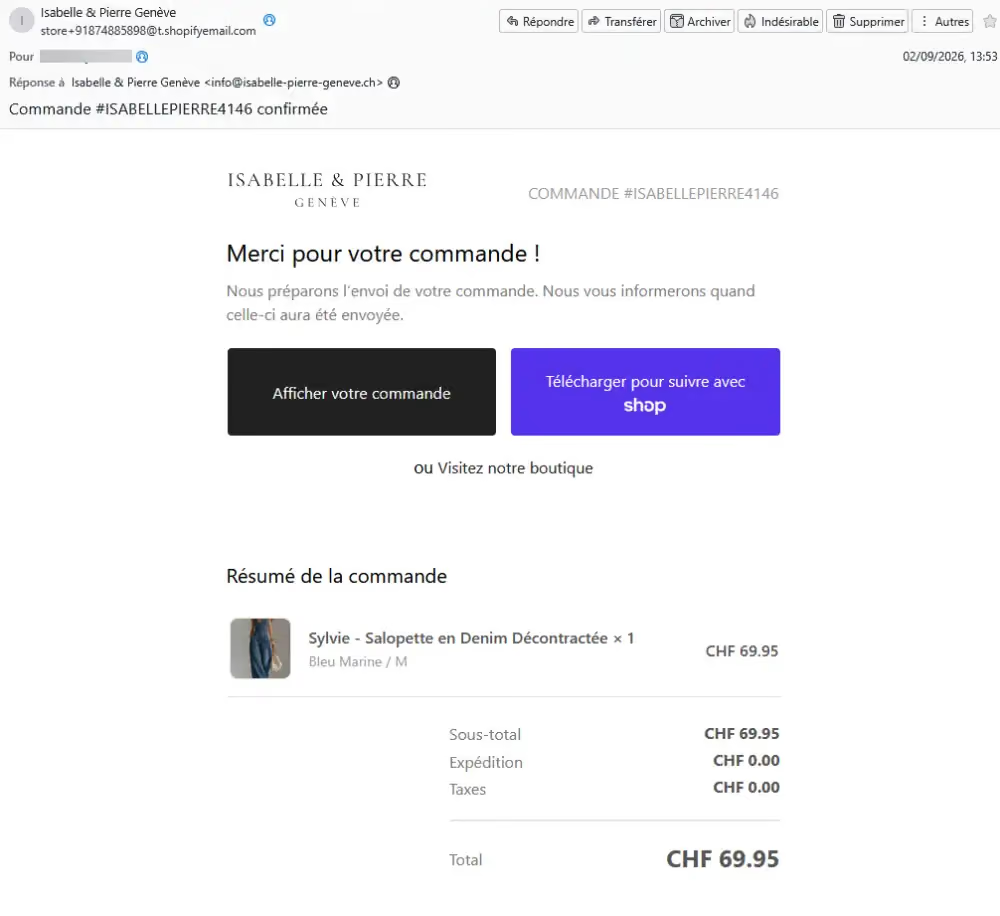
September 3, 2026
Shipping notification. The tracking number leads to an error page…
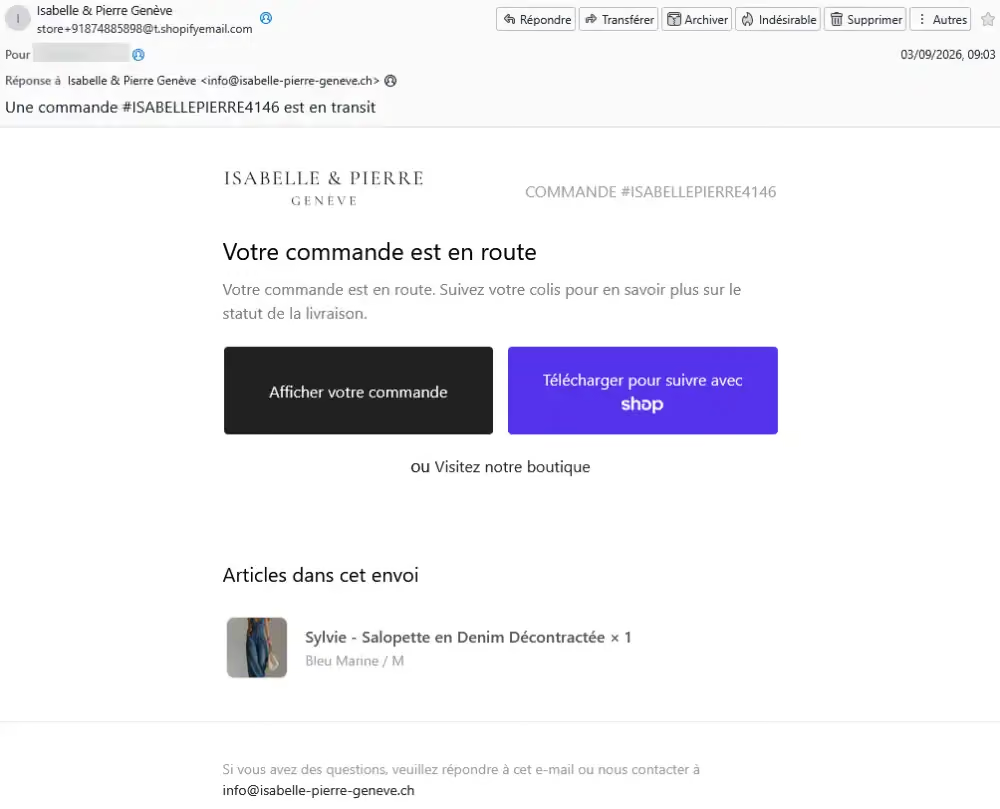
September 5, 2026
Tracking notification. Her number shows an order that cannot be found...
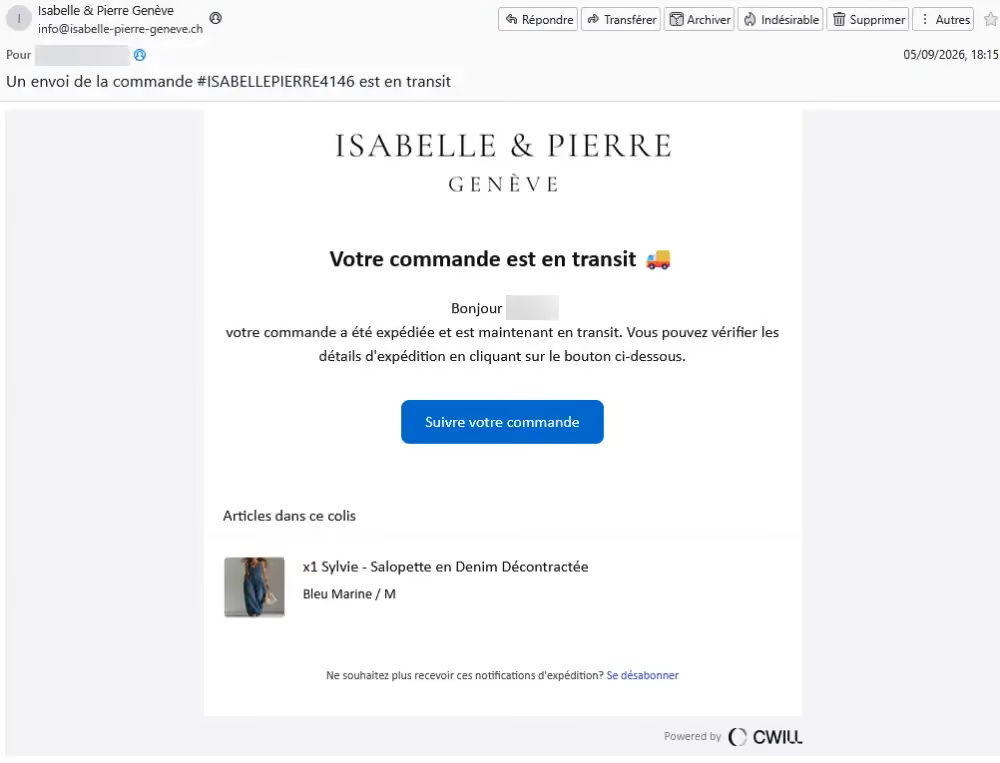
September 19, 2026
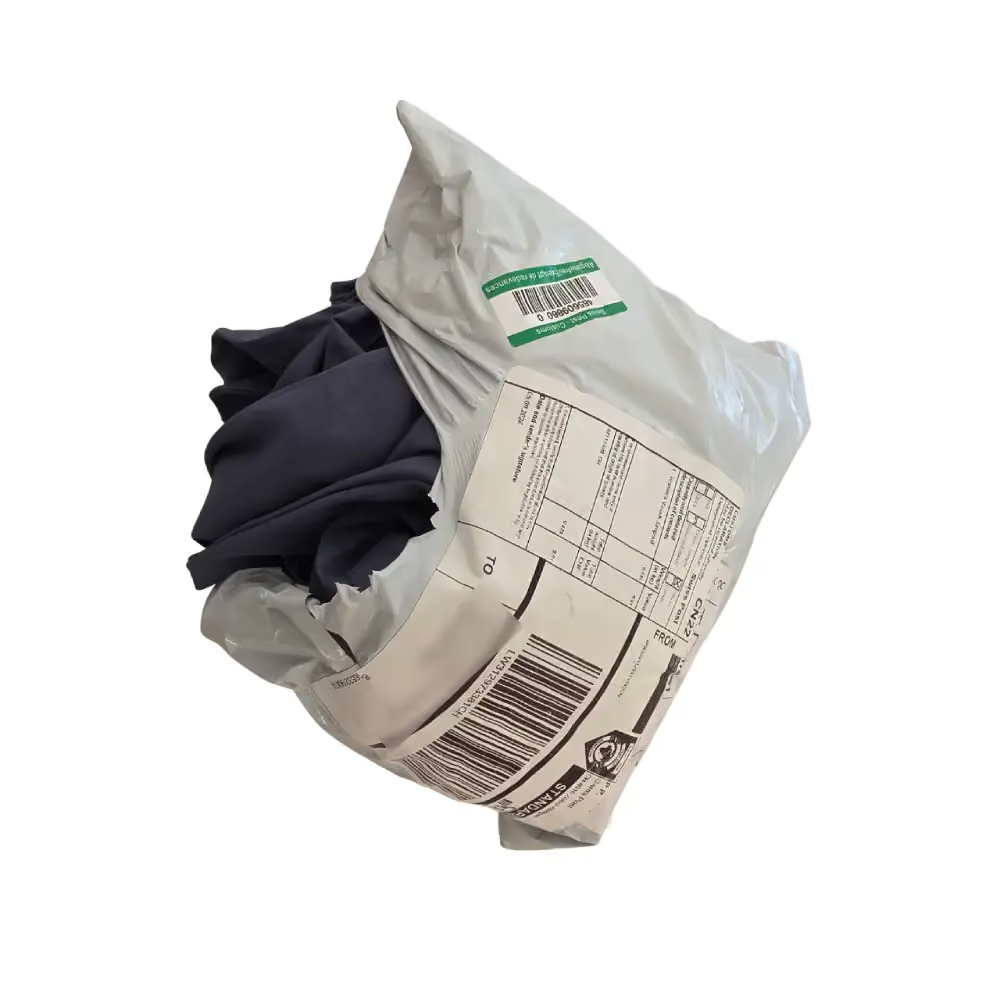
Delivery. The contents have nothing whatsoever to do with the product page.
Item ordered

Item received

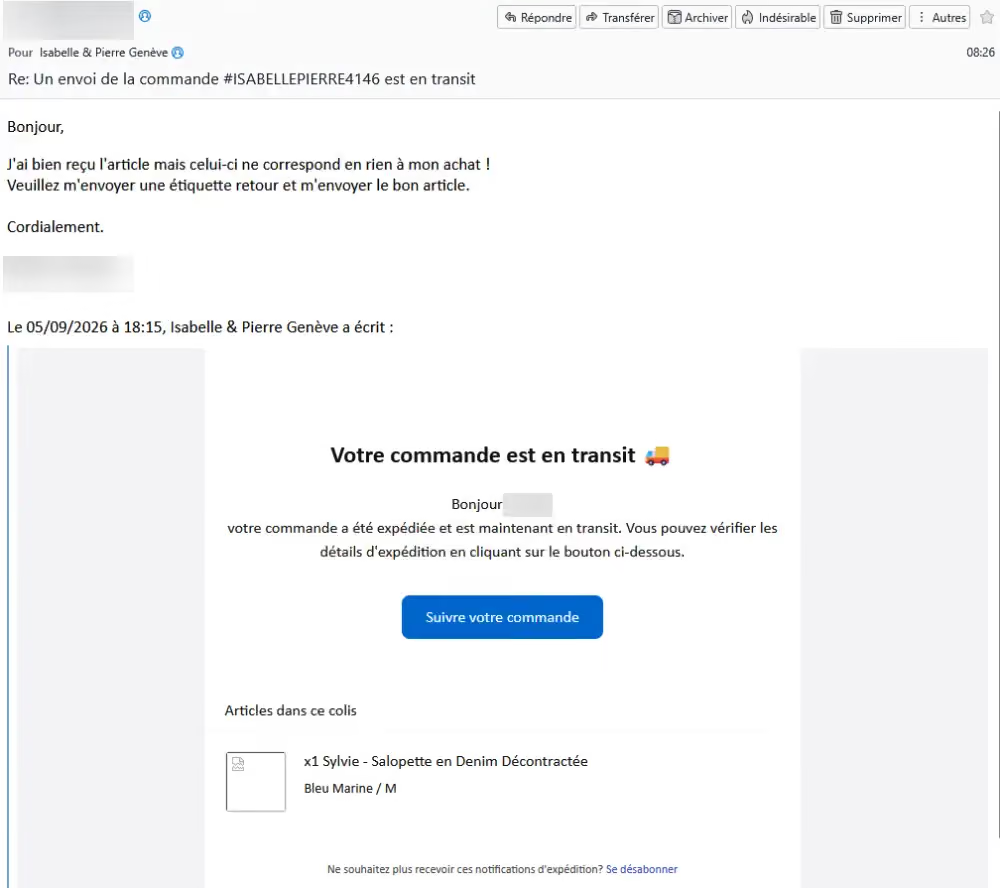
September 20, 2026
Return request.
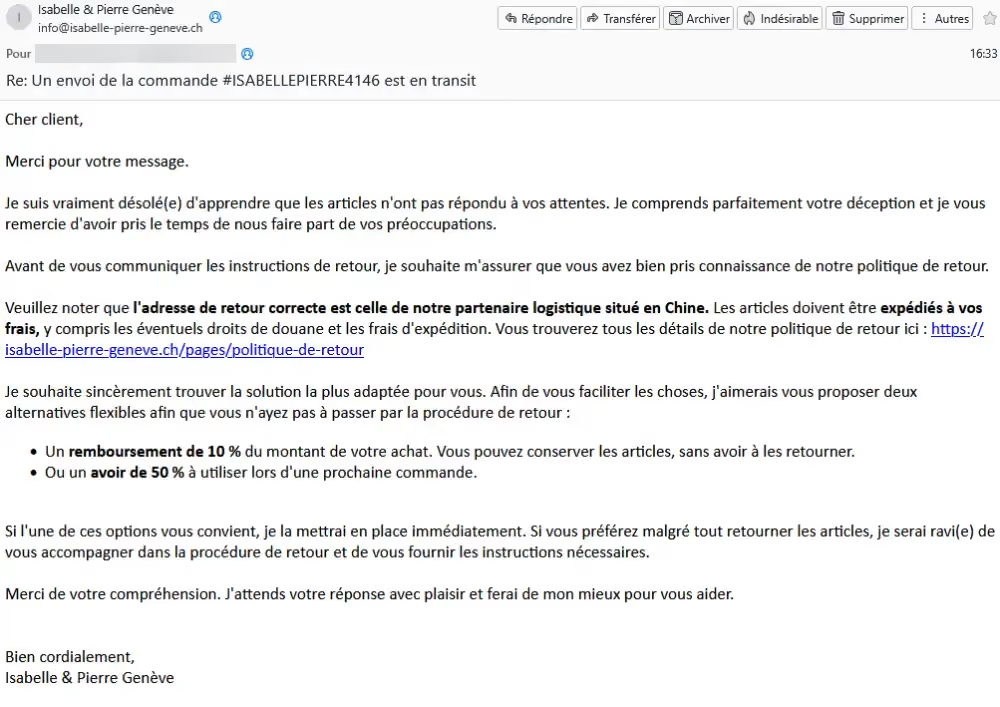
Reply the same day
The reply is worth reading in full, because it contains everything.
The return warehouse is confirmed in writing: it is located in China. Shipping costs and customs duties are the customer's responsibility. Sending the item back therefore costs more than the item received, and customer service knows it. That is why the return address is not given up front. They first make sure the customer has fully grasped what lies ahead.
Then come two offers presented as goodwill gestures. A 10% refund, with the customer keeping the item. Or a 50% credit toward a future order. In the first case, the seller keeps 90% of the money. In the second, it gives nothing back and gains a customer, or rather a victim.
This second option is the clearest admission in the whole file. A boutique closing for good after 34 years has no future order to offer. Proof of a well-run scam.
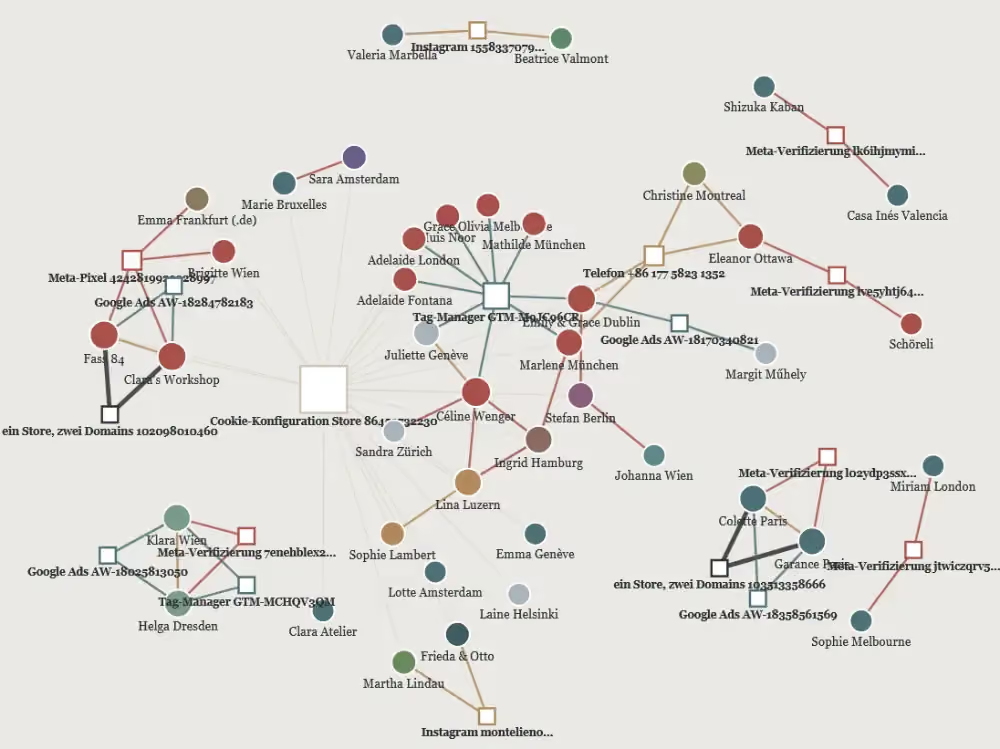
The operator of the Isabelle & Pierre Genève site is not an isolated seller. This store is only one satellite among dozens of others: same copy, same mechanics, same photographs, but a different domain name for each and first names chosen to suit the target country. Geneva, Zurich, Lucerne, Paris, Berlin, Munich, Vienna, Tallinn, Helsinki, Melbourne. In early September 2026, the Austrian fact-checking association Mimikama published the result of a colossal research effort.
The scale of the network
How the investigation linked the stores to one another
As for the photographs of the items on offer, they are most often lifted from legitimate marketplaces such as Amazon, Temu, or Shein. The portraits of the supposed founders are generated by artificial intelligence.
As for the story displayed on the site, it rests on a template with three variables: a number of years, a founding year, one or two first names. Reading the same sentence in two languages is enough to make the mechanism obvious.
sandra-zurich.com
Seit 1996 haben wir Sandra Zürich mit Herz, Anspruch... (Since 1996, we have built Sandra Zürich with heart, high standards...)
isabelle-pierre-geneve.ch
Depuis 1992, nous avons fait grandir cette boutique avec du cœur, de l'exigence... (Since 1992, we have grown this boutique with heart, high standards...)
Copy and paste leaves traces...
A Berlin store announces the permanent closure of a Munich store.
A Vienna brand published its terms and conditions leaving the note "to be completed before publication" where its representative's name should be.
Elsewhere, the logo and the signature do not carry the same last name.
These slips are concentrated on the pages that bind the seller, the legal notice and the terms and conditions, the ones that get duplicated and never reread.
Operated by Pedmas LLC, registered in Wyoming.
The terms and conditions name a holder based in Madeira.
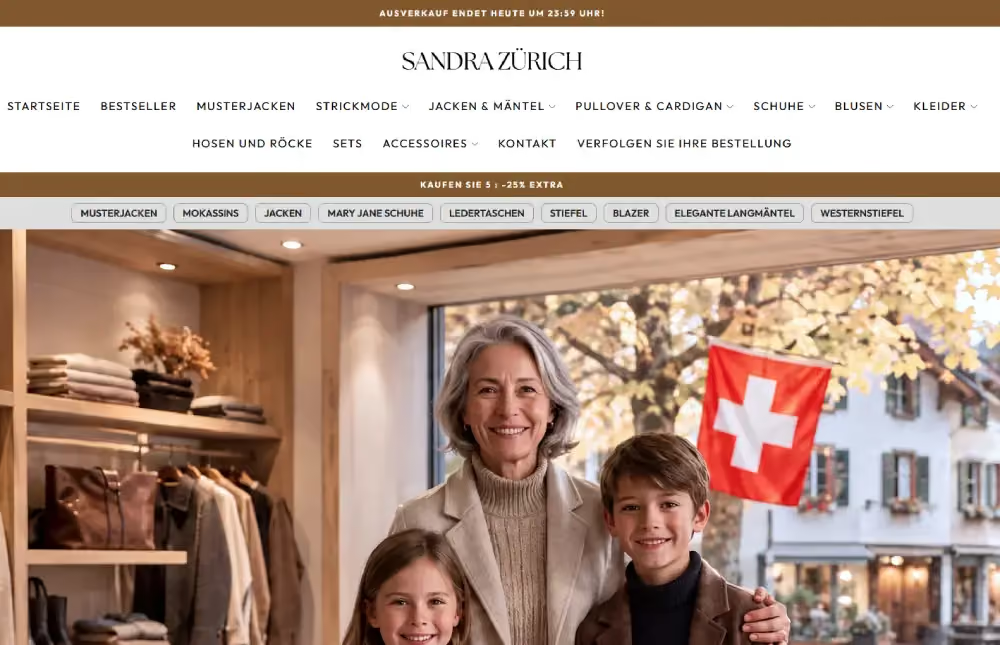
The site is in German.

No registered company name shown.
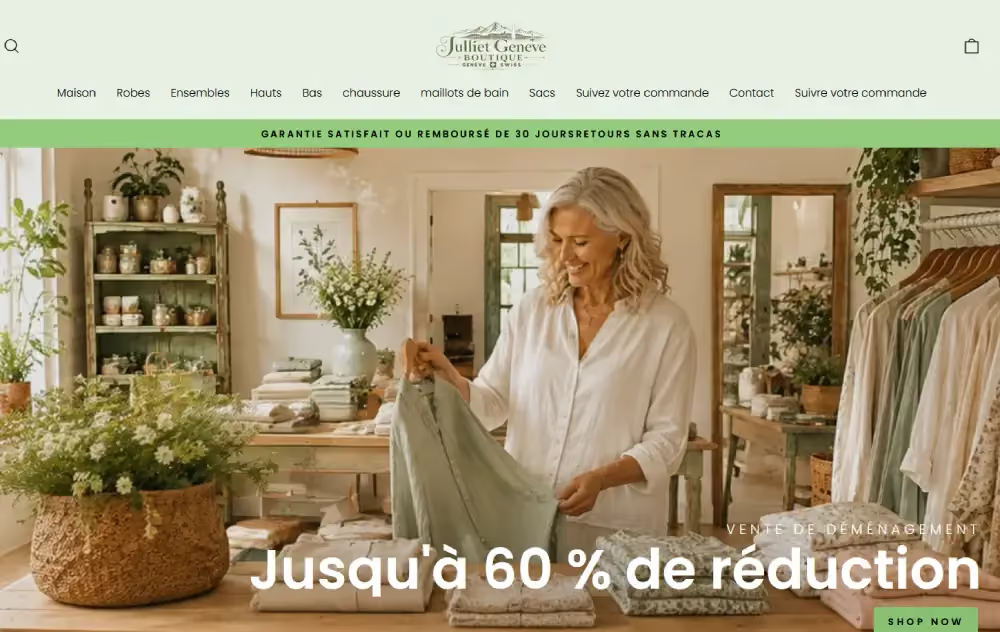
E-commerce site operated by Logos Ecom LLC

E-commerce site operated by Graca Enterprises LLC

This store accepts payment via Twint

Do NOT confuse it with garanceparis.com, a French women's ready-to-wear brand founded in 2015 that offers in-store pickup. The fraudulent site takes the name of a very real company, simply adding a hyphen and changing the extension.

Naivety explains some of these cases, rarely all of them. Some buyers rarely order online and have no frame of reference. Others buy in the evening, tired, or in a hurry. The rest of the work is done by the site itself, which piles up trust signals, all of them fake, all of them free to produce.
The human story
It disarms vigilance first. No one thinks to audit a grandmother going into retirement. The countdown does the rest: it replaces thinking with the fear of missing out on a bargain. It pushes you to click buy!
Logos and icons
The Swiss Post logo next to the words "free delivery," a Swiss flag, the phrase "family business since 1992." None of these items is verified by anyone. They are simply pasted onto the page. The "30-day satisfaction or money-back guarantee" displayed in large type belongs to the same family: the terms and conditions empty it of all meaning ten clicks further down.
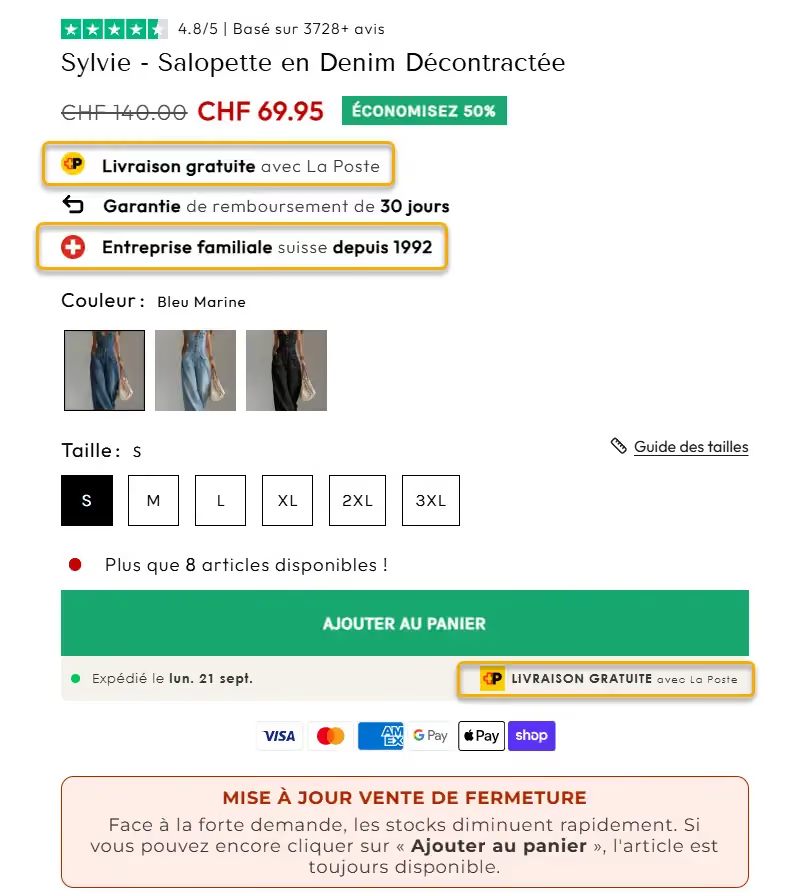
The last factor is the most counterintuitive. These stores run on Shopify, a professional platform used by thousands of perfectly legitimate businesses. The result is clean, fast, mobile-friendly, with a standard checkout. Visitors compare it with the cobbled-together sites they have been taught to spot and conclude that this one is serious. As for the founding couple's faces, they are generated by artificial intelligence: a reverse image search returns no results, which reassures instead of raising the alarm.
The model is dropshipping. The customer pays, the operator orders from an Asian wholesaler, the package ships from China. The store has no stock, no workshop, no storefront.
The most revealing part is written in black and white in the return policy of isabelle-pierre-geneve.ch: "Our return warehouse is located in China" and "The customer bears the cost of returning items to our return warehouse in China." So the 30-day guarantee does exist. It simply costs more than the item.
In Switzerland, be aware that an online purchase carries no right of withdrawal. The "Fédération romande des consommateurs", the French-speaking Swiss consumer association, states it unambiguously: "Swiss law provides for no cooling-off period or other right of return." Art. 40a et seq. CO (Swiss Code of Obligations) covers door-to-door and telephone sales, not the internet.
One door remains open: a product that is defective or does not match what was ordered, covered by the warranty for defects under art. 197 et seq. CO, provided the defect is reported immediately. It is also, and this is no coincidence, the ground to cite with your bank.
1. Look for the registered company name and address in the legal notice
No identifiable company, no order. Of the seven sites examined, two show no registered company name anywhere. A site presenting itself as Swiss must correspond to a company entered in the commercial register: the check takes thirty seconds at zefix.ch.
2. Read the shipping and return terms all the way through
Shipping from China is not suspicious in itself; plenty of honest businesses do it and say so clearly. What should raise a flag is the contradiction between two pages of the same site: a storefront promising a Geneva boutique, the Swiss Post logo, and free delivery within Switzerland, and terms that mention a Chinese warehouse with return costs borne by the customer. So look for three specific pieces of information.
1) where the package ships from
2) where it has to be sent back
3) who pays for that return.
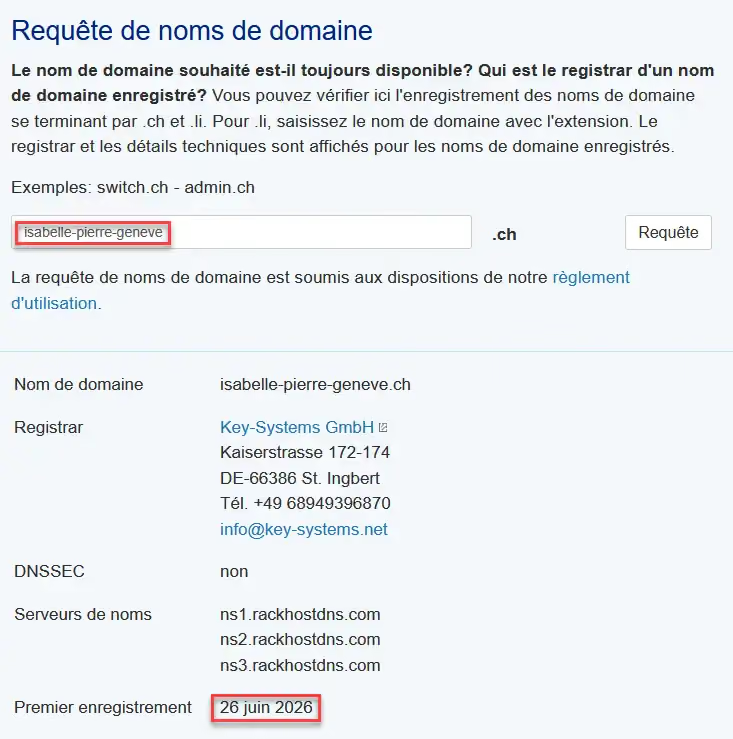
3. Check the age of the domain name
A WHOIS search is enough. A business "founded in 1992" whose domain is a few months old is a scam in plain sight. The domain name isabelle-pierre-geneve.ch was created on June 26, 2026.
4. Reread the brand name and the domain
The site jullietgeneveboutique.com spells its own name "Julliet," with two L's. It presents itself as Genevan, but its address ends in .com. A merchant in business for 30 years knows how to spell their own name.
5. Come back to the page the next day
Reopen the site 24 hours after your first visit. If the countdown still announces "sale ends tonight at 11:59 p.m.," it is not urgency, it is set dressing.
6. Search for the brand on Google with "reviews" or "scam"
Be wary of reviews displayed on the site itself: the merchant chooses what to publish. Three thousand five-star ratings with no trace on an independent platform prove nothing. Real feedback is elsewhere, on forums and review sites, and it is rarely flattering.
Dispute the charge on your card
It all depends on how you paid. With a card, or a wallet linked to one, Visa, Mastercard, American Express, Apple Pay, Google Pay, or Shop Pay, you have recourse. Contact your bank or the card issuer without waiting for the announced delivery window to end, citing goods not received or not as described. The usual window is 120 days, to be confirmed with the issuer.
With TWINT, the situation is far less favorable. That system has no dispute mechanism equivalent to the one the card networks provide. Contact the bank that runs your app without delay, but the chances of recovery remain slim. Two of the seven Swiss sites identified accept TWINT at checkout: on this type of store, it is the payment method to avoid.
Save the evidence immediately
Take screenshots of the homepage, the ad, the countdown, and the product page. Keep the order confirmation and every exchange with customer service. These stores disappear within a few weeks and are reborn under other domain names: in two months, nothing will be viewable.
These records do not guarantee a refund, but without them no step succeeds, neither with the bank nor with the police.
Report it
The Federal Office for Cybersecurity publishes a fact sheet on fraudulent online stores at bacs.admin.ch. Reports are filed through its online form, report.ncsc.admin.ch. The office also recommends reporting stores with incomplete contact details to SECO, the State Secretariat for Economic Affairs, and, in case of financial loss, filing a complaint with the cantonal police.
The Swiss cantonal police forces also run a joint platform with the National Cyber Security Centre, at cybercrimepolice.ch. You can report a case there and, above all, consult an alert list of suspicious sites, kept up to date and sorted by category. The habit is worth having before you order, too: if the address is already listed, the question is settled.
Never pay customs release fees demanded by email after the order
This is the second wave, and it targets the people who have already paid once.
These sites are not built to last. One of the network's German stores closed seven days after the first public warning. The domain name goes dark, the fraudulent format starts over elsewhere under another first name, in another language, under another domain name. The only protection that holds over time is not the blacklist, it is the mechanics: a business closing after 30 years does not need a countdown that resets every night.
If this article helps you recognize one of these stores before you place an order, it will have done its job. Share it around you: every person warned is one victim fewer.
Sources and findings:
• Mimikama investigation, "Das Netz hinter den erfundenen Familien-Onlineshops" (in German)
• Analysis of the Laine Helsinki store by Mika Pöyliö, poylio.fi (in Finnish)
• Fédération romande des consommateurs, fact sheet "Le produit commandé ne convient pas."
AGOP is a Swiss private investigation agency based in Geneva.


.svg)